
Core Gameplay Loop
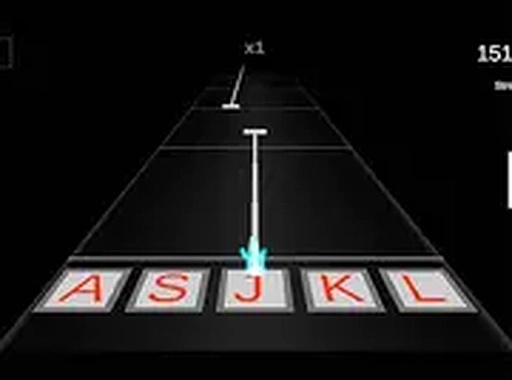
Rhythm Pulse centers on a straightforward interaction: visual markers appear on screen in time with a background track. Each marker corresponds to a specific beat or accent in the music. The player must press a key or click at the exact moment the marker reaches a target zone. Success depends on reading the visual cue and reacting with millisecond precision. The game provides immediate feedback through visual and possibly audio cues, indicating whether the hit was early, late, or perfectly timed. This loop repeats with increasing complexity as the music progresses.
Audio-Visual Synchronization
The core innovation lies in how tightly the visual elements are woven into the soundtrack. The markers do not simply appear at random intervals; their placement is calculated to match the rhythm, tempo changes, and dynamic shifts of each song. This creates a feeling of playing along with the music rather than just reacting to random prompts. The minimalist interface, likely featuring clean lines and subtle animations, ensures the player's attention remains on the timing rather than on distracting graphics. The result is an experience that feels both responsive and immersive.
Difficulty Progression
Rhythm Pulse does not maintain a static difficulty level. As a track plays, the tempo may increase, or the pattern of markers may become more complex. Some songs may start with a slow, steady beat to help players find their rhythm, then accelerate into faster passages that demand quicker reactions. This gradual ramp-up keeps the gameplay engaging without becoming frustrating. Players who master one speed can move on to more demanding tracks, each offering a fresh set of timing challenges. The game likely includes a variety of songs with different tempos and structures to test different aspects of timing and coordination.
Visual Design and Feedback
The game's visual language is built around clarity and immediate feedback. The markers are designed to be easily distinguishable, and the target zone is prominently displayed. When a player hits a marker perfectly, a visual effect may confirm the success. A near miss might produce a different visual or audio cue, helping the player adjust their timing for the next beat. This real-time feedback loop is essential for learning. The full-screen mode removes any desktop distractions, allowing the player to focus entirely on the rhythmic challenge. The overall aesthetic is likely sleek and modern, prioritizing function over ornamentation.
Player Skill Development
Success in Rhythm Pulse is not about memorizing patterns but about developing a feel for rhythm and timing. Regular play helps train the brain to anticipate beats and coordinate hand movements with audio cues. Players often start with simpler, slower tracks to build a foundation of accuracy. As they improve, they can attempt faster songs that require quicker reflexes and sustained concentration. The game rewards consistency over speed; a steady stream of well-timed hits yields a higher score than a few perfect hits mixed with many misses. This focus on gradual improvement makes the game accessible to newcomers while still offering depth for experienced players.
Session Flexibility
Rhythm Pulse is designed for both short bursts of play and longer sessions. A single song may last only a few minutes, making it easy to fit into a busy schedule. For players who want a more extended experience, playing through multiple tracks in sequence provides a cumulative challenge. The lack of complex menus or lengthy load times means players can jump directly into the action. This pick-up-and-play nature, combined with the satisfying loop of hitting beats, makes it a suitable choice for anyone looking to test their coordination in a fun, low-pressure environment.



Comments
0 comments