
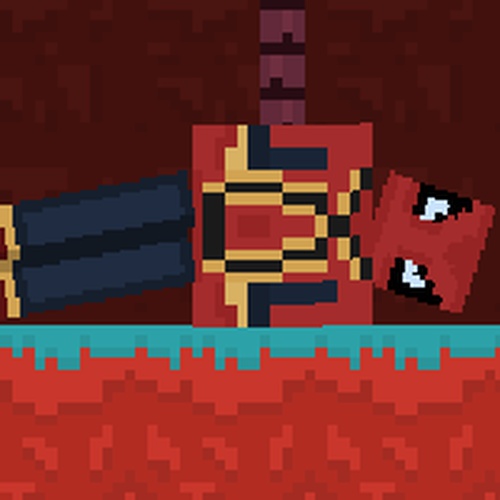
Core Mechanic: Rope Control
The primary interaction in this title revolves around managing a flexible line attached to the character. Players hold and pull back on the rope, then release at the right moment to propel the character forward. The distance and arc of each jump depend on how long the rope is held and the angle of release. This simple input method creates a satisfying loop where small adjustments lead to noticeably different outcomes.
Obstacle Patterns and Platform Layout
As players progress, they encounter a variety of barriers and landing zones arranged in increasingly complex sequences. Some obstacles move, while others require precise timing to clear. Platforms may be spaced far apart or positioned at awkward angles, forcing players to rethink their approach. Learning the rhythm of each segment becomes essential for consistent forward movement.
Visual Style and Atmosphere
The game uses bright, clean visuals with a cheerful color palette. Characters and environments are designed to be friendly and non-threatening, making the experience suitable for a wide audience. Animations are smooth and responsive, giving clear feedback on each action. The overall look supports the casual tone without distracting from the core gameplay.
Session Structure and Pace
Each attempt is brief, typically lasting only a few minutes. This structure makes the game ideal for short breaks or quick entertainment sessions. There is no long-term commitment required, and players can pick up where they left off without losing progress. The fast restart cycle encourages repeated attempts to improve performance.
Skill Development and Mastery
Success depends on developing a feel for rope physics rather than memorizing sequences. Players gradually improve their ability to judge distance and timing through practice. The difficulty curve rises steadily, introducing new challenges that build on previously learned skills. This progression keeps the experience fresh without becoming frustrating.




Comments
0 comments